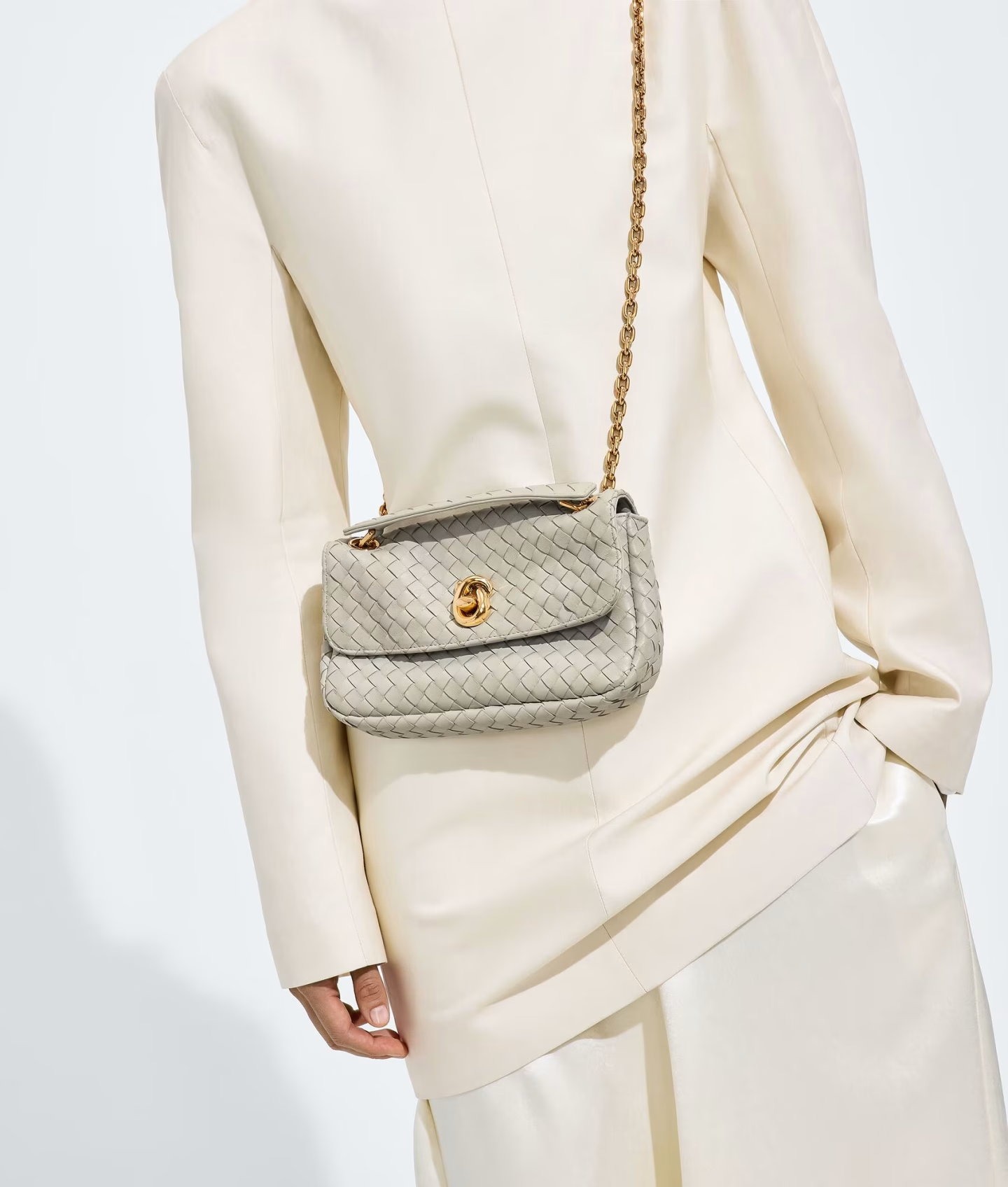

There’s a moment every luxury handbag lover hits: standing in front of that woven leather, no logo in sight, price tag somewhere north of what your rent used to be and asking yourself if this is a smart investment or a very expensive impulse.
Bottega Veneta has spent the last few years being the bag world’s quiet flex. No monogram, no branding, just the instantly recognizable intrecciato weave. But “quiet luxury” doesn’t mean “quiet price tag.” So let’s actually break down whether it earns its place in your closet — and your budget.
The Price Reality
Entry-level Bottega Veneta styles start around $1,800 for smaller pieces, climbing to $4,500+ for the larger, more structured bags. That’s a wide range, and where you land in it matters a lot for whether this feels like an investment or overspending.
For comparison, a similarly iconic Chanel flap now sits well above $10,000 for a medium size. So relative to the top tier of the handbag world, Bottega is actually the “accessible luxury” option which is a strange sentence to say about a four-figure bag, but here we are.
What You’re Actually Paying For
The intrecciato weave — that signature woven leather look isn’t a printed pattern or embossing. Each panel is genuinely hand-woven, a process that can take upwards of 8 to 15 hours per bag depending on the style. That’s real craftsmanship time, not just brand markup, and it’s part of what separates Bottega from a fast-fashion “woven-look” bag that’s actually molded or stamped.
The leather quality itself also tends to age beautifully rather than looking worn out, part of why older Bottega pieces still show up desirable on the resale market years later.
The Resale Truth (This Is Where It Gets Interesting)
Here’s the part most “is it worth it” posts skip: resale value isn’t uniform across the brand, and which bag you choose matters more than the logo on the box.
- Overall retention: Bottega Veneta bags tend to hold roughly 60-75% of their value on the resale market — solid, though slightly behind Chanel’s 70-85% range.
- The standouts: The Pouch and the Cassette are the strongest resale performers in the current lineup, with resellers reporting the healthiest margins on these two styles specifically. Limited colorways (people talk about specific shades like Kiwi and Thunder) tend to command a premium over standard black.
- The pieces to think twice about: Older, non-intrecciato canvas pieces and styles that predate the “quiet luxury” wave tend to see noticeably softer demand on the secondhand market.
So the honest answer to “is Bottega Veneta a good investment” isn’t yes or no, it’s “yes, if you pick the right style.”
Bottega vs. The Alternatives
If you’re cross-shopping, here’s the honest tradeoff:
Choose Bottega if: you want the craftsmanship and quiet-luxury aesthetic at a lower entry price, you’re not chasing maximum resale return, and you gravitate toward minimal, logo-free design.
Choose Chanel (or a comparable heritage house) if: resale value retention is your top priority and you don’t mind paying significantly more upfront to get it.
Neither is the “wrong” choice, they’re just optimizing for different things.
My Verdict
If you’re buying a Bottega Veneta piece purely because it photographs well, it’s a fun purchase, nothing wrong with that, but if you’re buying it as an investment, be intentional: the Pouch and Cassette in classic or premium colorways are where the actual resale data supports the price tag. Skip the trend-driven limited pieces unless you genuinely love them for yourself, because that’s where value can soften fastest.
Craftsmanship-wise, yes, the hours of hand-weaving in every piece are real, and it shows in how these bags age. Investment-wise, it depends entirely on which piece you pick.
Have you bought a Bottega piece recently, or are you eyeing one? Tell me which style in the comments, I want to know what everyone’s actually considering right now.
Luxury, Style & Elegance—Straight to Your Inbox!
